When selecting LED modules for signage, one of the most common questions is:
Should I choose 12V or 24V?
Both voltages are widely used in channel letters, light boxes and signage applications. However, the right choice depends on the size of the project, cable length, installation layout and power distribution requirements.
12V LED Modules
12V LED modules are commonly used for:
• Small and medium-sized channel letters
• Standard signage projects
• Shorter wiring distances
• Applications where flexible module layouts are required
For smaller signs, 12V systems can provide a simple and practical solution.
24V LED Modules
24V LED modules are often better suited for:
• Large channel letters
• Large light boxes
• Long cable runs
• Projects requiring more efficient power distribution
A higher voltage system can help reduce current requirements for the same power level, making 24V a practical option for larger signage installations.
The Importance of Voltage Drop
As cable length increases, voltage drop becomes an important consideration.
For large signs and long wiring runs, selecting the correct voltage and designing the power distribution properly can help maintain more consistent brightness across the entire installation.
Choosing the Right Power Supply
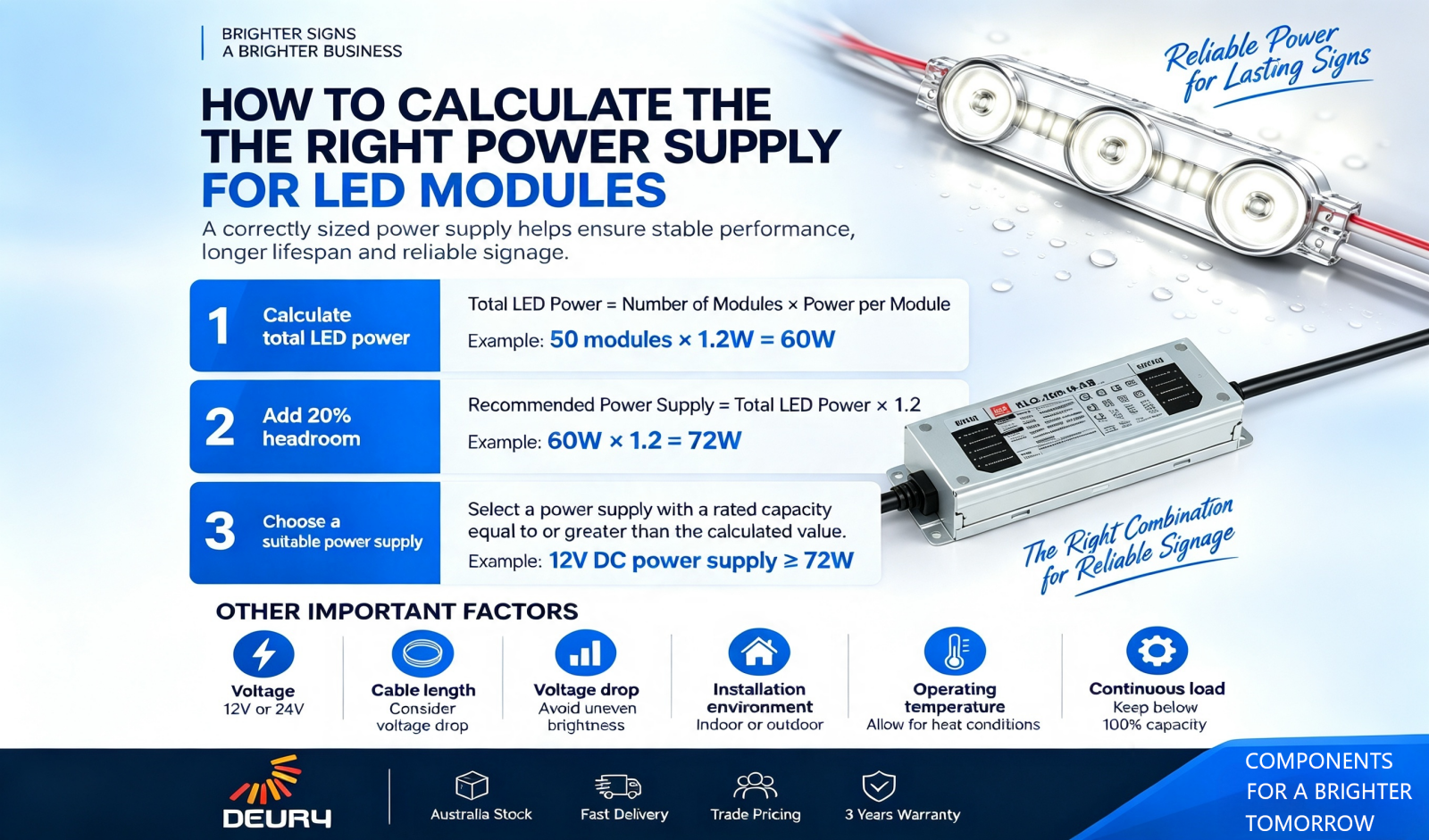
The LED module voltage must match the output voltage of the LED power supply.
A well-designed signage lighting system should consider:
• Module voltage
• Total power consumption
• Cable length
• Power injection points
• Installation environment
Final Thoughts
There is no single voltage that is suitable for every signage project.
12V can be a practical choice for smaller and standard installations, while 24V may offer advantages for larger projects and longer cable runs.
The best solution depends on the complete lighting design.
Choosing the right voltage at the beginning can help improve installation efficiency, lighting consistency and long-term reliability.


 LED Knowledge
What Is the Difference Between 12V and 24V LED Modules?
LED Knowledge
What Is the Difference Between 12V and 24V LED Modules? 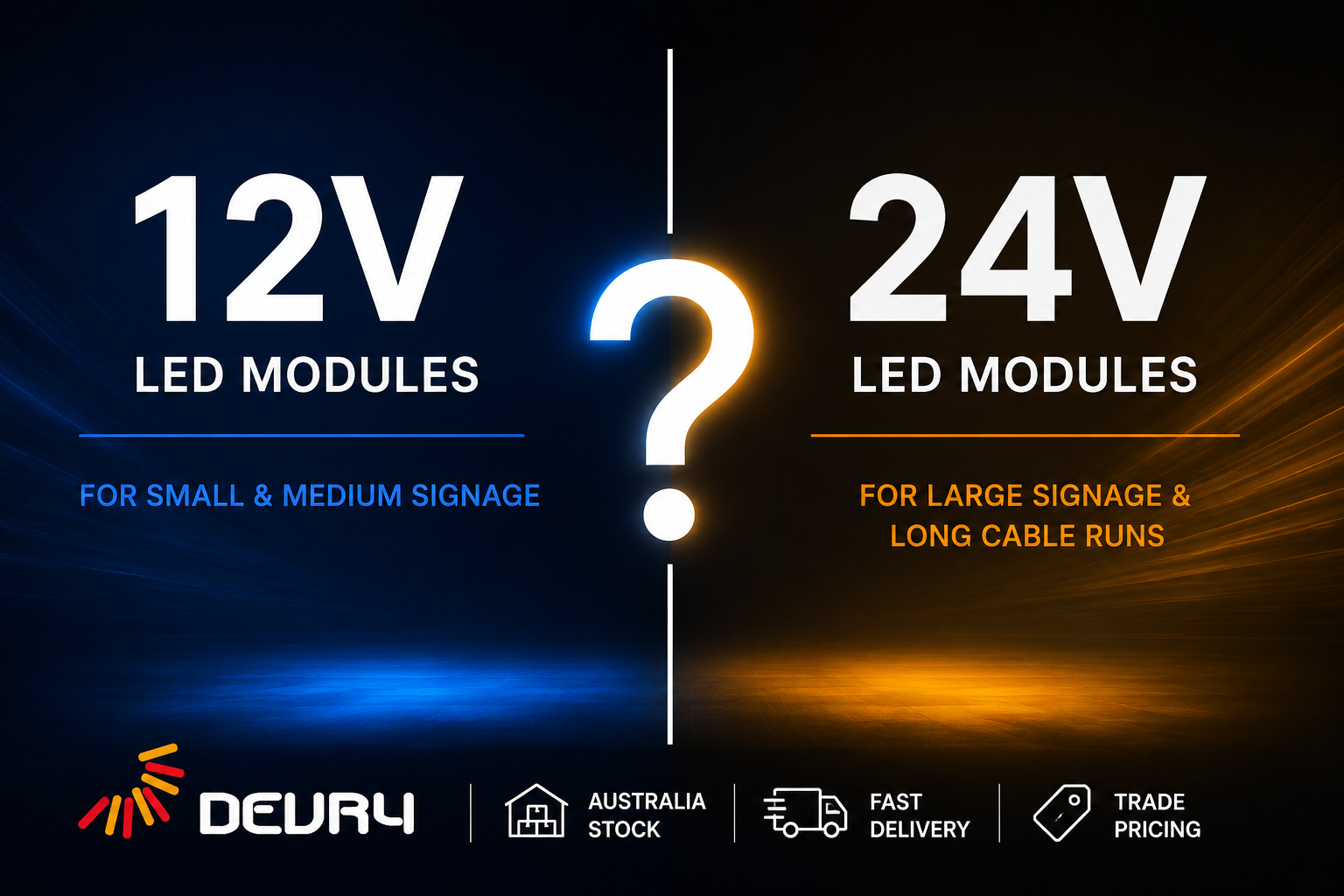



 04 5984 4358


